ZYRO Blog
Business banking and payments, explained
Short, plain-English guides for Indian businesses on how money moves: bank transfers, current accounts, payment gateways, UPI, escrow, cards and in-store payments.
Business banking

IMPS vs NEFT vs RTGS
IMPS, NEFT and RTGS are the three main ways to send money between bank accounts in India. IMPS is instant and runs 24x7, best for smaller urgent transfers. NEFT settles in batches through the day and suits routine payments. RTGS settles each transfer individually in real time and is meant for high-value payments of ₹2 lakh and above.
Read the guide →
What is an escrow account?
An escrow account is an account where money is held by a neutral third party, usually a bank, until the conditions agreed between buyer and seller are met. Only when those conditions are confirmed is the money released to the receiving party, which protects both sides of the deal.
Read the guide →
What is connected banking?
Connected banking links a company's current accounts at one or more banks to a single software dashboard through secure bank integrations. Finance teams can see balances and statements, make single and bulk payments, and reconcile transactions in one place instead of logging in to each bank portal.
Read the guide →
Current account for a proprietorship
A sole proprietor opens a current account in the business name using the owner's KYC documents plus proof that the business exists. Under RBI's KYC rules, banks usually ask for two documents in the firm's name, such as a GST certificate, Udyam registration or shop and establishment licence.
Read the guide →
Prepaid cards for employees
Prepaid cards for employees are cards that a business loads with money and gives to staff for work spending. The company sets limits and categories, sees every transaction in real time, and avoids cash advances and slow reimbursements. In India they are issued as prepaid payment instruments under RBI rules.
Read the guide →
How to make bulk payments
To make bulk payments, a business prepares one list of beneficiaries and amounts, uploads it to its bank or a bulk payment platform, gets the batch approved, and sends all payments together through NEFT, IMPS or RTGS. The platform then reports which payments succeeded or failed so they can be reconciled.
Read the guide →
Expense management for small businesses
Expense management is the process of recording, approving and controlling what a business spends. For a small business it means a simple spending policy, approval before or after spending, a receipt for every expense, and one place to see all spending, so money does not leak and month-end accounting is quick.
Read the guide →
Bulk payment file format
A bulk payment file is a spreadsheet with one row per payment that you upload to your bank or payment platform to pay many people at once. Each row needs the beneficiary name, account number, IFSC, amount and payment mode (NEFT, IMPS or RTGS), plus a remark and your own reference ID so you can match the results.
Read the guide →
Vendor payment format in Excel
A vendor payment format is a sheet that tracks each vendor invoice from receipt to payment: vendor details, invoice number and date, amount, TDS, net payable, due date, approval, payment status and the bank reference (UTR). Keeping it in one sheet helps you pay on time, deduct TDS correctly and reconcile every payment.
Read the guide →
Payments

What is payment orchestration?
Payment orchestration is a software layer that connects a business to several payment gateways through one integration. It decides which gateway should process each payment, retries failed payments on another gateway, and gives one combined view of all transactions and settlements.
Read the guide →
What is card tokenisation?
Card tokenisation replaces a customer's real card number with a unique token issued by the card network. Under RBI rules in force since 1 October 2022, merchants and payment providers in India may not store full card numbers, so saved-card payments must use tokens instead.
Read the guide →
Payment orchestration vs payment gateway
A payment gateway is the service that securely processes an online payment. Payment orchestration is a layer above several payment gateways: it connects them through one integration, decides which gateway handles each payment, retries failures on another gateway, and combines reporting. A business needs at least one gateway; it needs orchestration once it uses more than one.
Read the guide →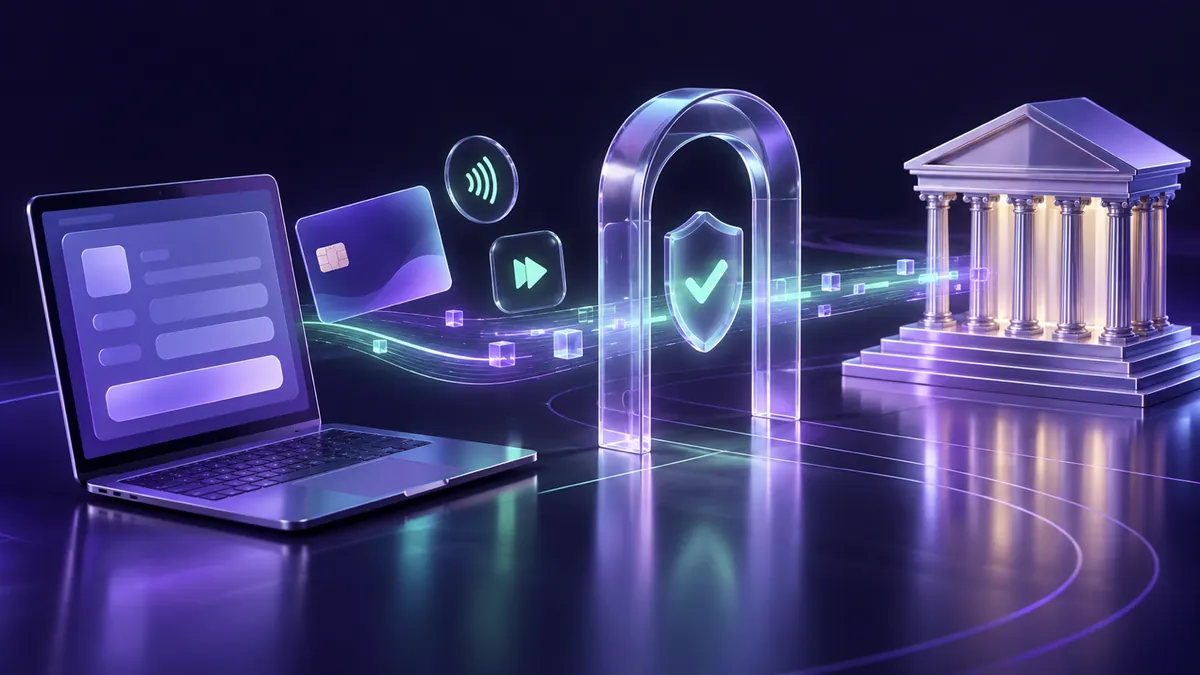
What is a payment gateway?
A payment gateway is a service that lets a website or app accept online payments. When a customer pays, the gateway securely passes the payment to their bank, card network or UPI, gets the approval, and tells the merchant whether the payment succeeded. The money is then settled to the merchant's bank account.
Read the guide →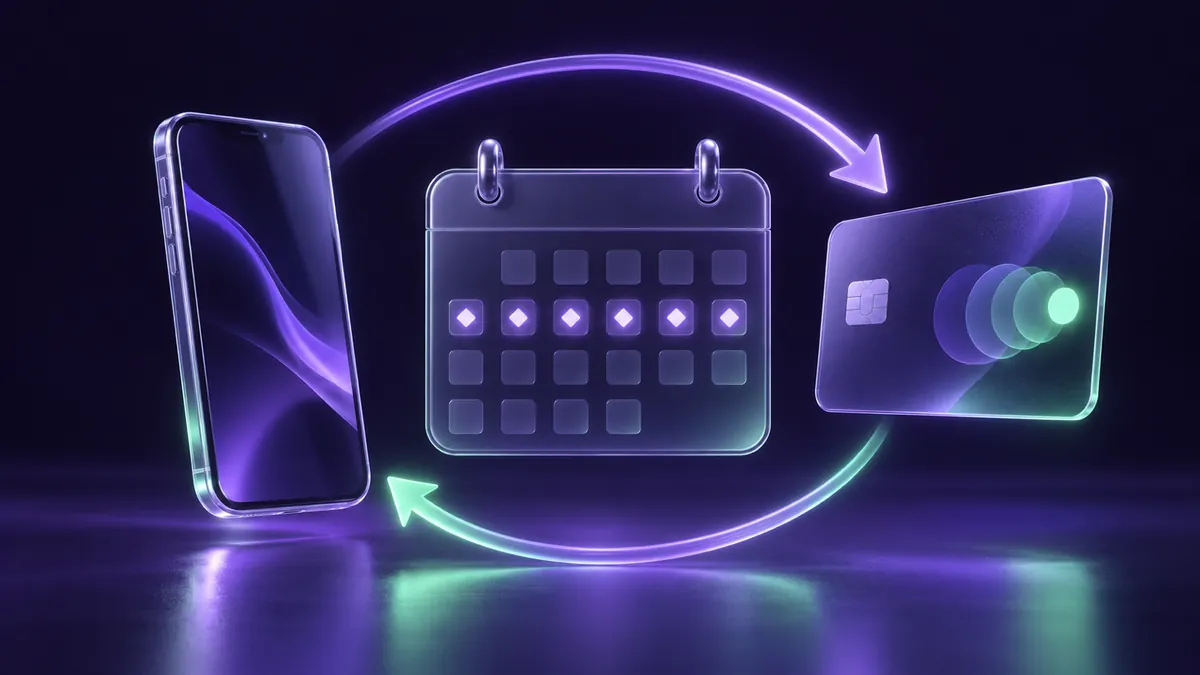
What is UPI AutoPay?
UPI AutoPay is a feature of UPI, run by NPCI, that lets a customer approve a recurring payment mandate once in their UPI app. After that, the business can collect the agreed amount automatically on schedule, such as monthly for a subscription, an EMI or a bill, without the customer approving each payment.
Read the guide →
How does no-cost EMI work?
No-cost EMI lets a customer split a purchase into monthly instalments without paying more than the product price. The bank still charges interest, but the merchant or brand covers it, usually by giving an upfront discount equal to the interest. The customer may still pay GST on the interest or a processing fee.
Read the guide →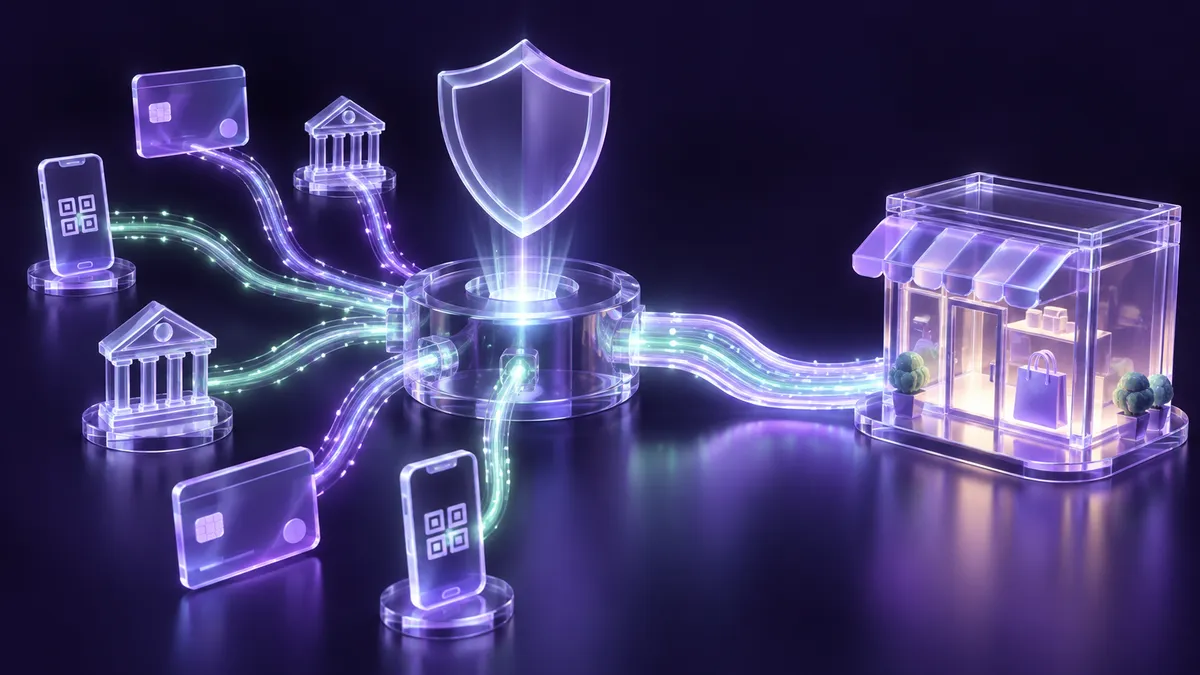
What is a payment aggregator?
A payment aggregator (PA) is a company that lets many merchants accept payments by UPI, cards, netbanking and wallets without each merchant setting up its own arrangement with banks. The aggregator collects the money from customers, holds it in an escrow account, and settles it to each merchant's bank account. In India, non-bank payment aggregators need authorisation from the Reserve Bank of India (RBI).
Read the guide →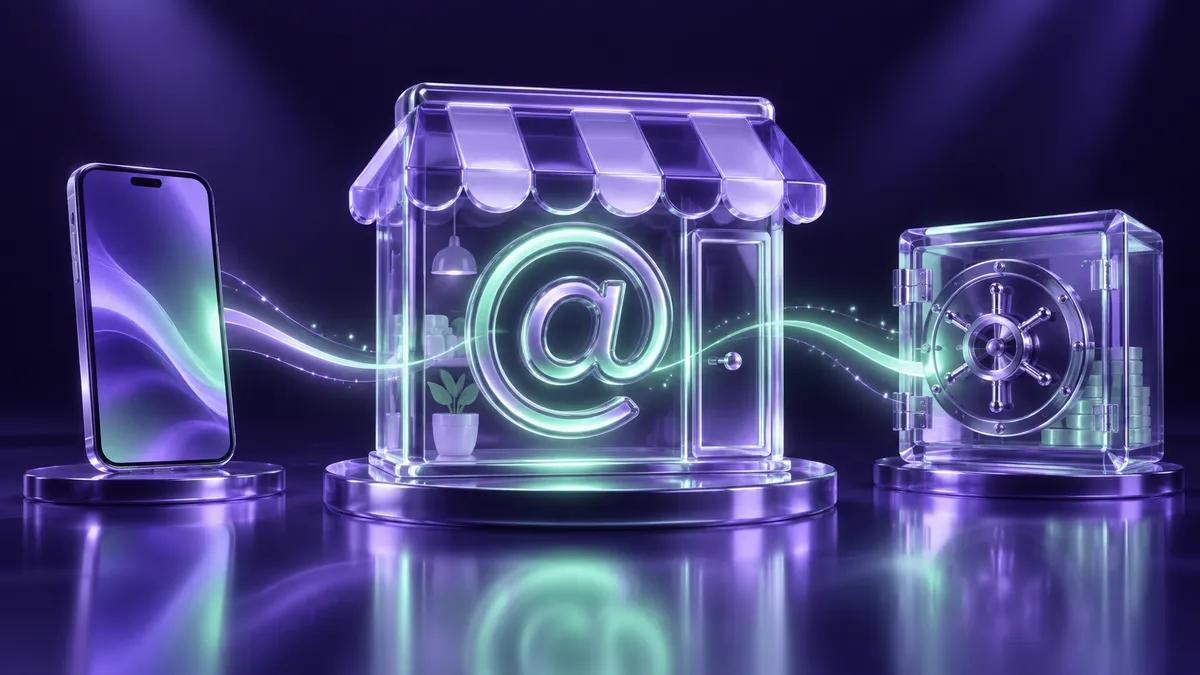
What is a UPI ID for business?
A UPI ID, also called a VPA (Virtual Payment Address), is a short payment address like yourshop@bank that points to a bank account, so customers can pay you without knowing your account number or IFSC. A business UPI ID is a merchant UPI ID linked to your business current account, which lets you accept payments through QR codes, soundboxes and checkout pages with the business name shown to the payer.
Read the guide →
What is MDR (merchant discount rate)?
MDR, or merchant discount rate, is the fee a business pays to its bank or payment provider for every card or digital payment it accepts, usually a percentage of the transaction amount. It is shared between the bank that issued the customer's card, the card network and the bank or provider that serves the merchant. In India, MDR on regular UPI payments and RuPay debit cards is zero, while other cards carry an MDR that depends on the card type and your agreement.
Read the guide →
Payment infrastructure
What is a UPI switch?
A UPI switch is the software system that connects a bank or payment service provider to NPCI's UPI network. It receives UPI requests, validates them, talks to the bank's core banking system, and sends responses back through NPCI, so payments, collect requests and mandates complete in real time.
Read the guide →
What is an IMPS switch?
An IMPS switch is the system that connects a bank or payment provider to NPCI's IMPS network. It sends and receives instant fund transfer requests, checks them, posts debits and credits to the bank's core banking system, and returns the result in seconds, 24x7.
Read the guide →
In-store payments

How does a UPI soundbox work?
A UPI soundbox is a small speaker linked to a shop's UPI QR code. When a customer pays by scanning the QR, the soundbox announces the payment and amount out loud within seconds, so the shopkeeper knows the money has arrived without checking a phone.
Read the guide →
POS machine charges in India
The cost of a POS machine in India usually has two parts: a fee for the device (one-time price or monthly rental) and a merchant discount rate (MDR), a small percentage charged on card payments. UPI and RuPay debit card payments carry zero MDR under government rules, while credit cards typically cost more.
Read the guide →
Dynamic vs static QR code
A static QR code is a fixed code that holds only the merchant's UPI details, so the customer types the amount every time. A dynamic QR code is generated for each payment and already contains the amount and an order or bill number, so the customer only confirms and pays. Static QR suits small shops with simple sales; dynamic QR suits billing counters, websites and businesses that need automatic matching of payments to bills.
Read the guide →